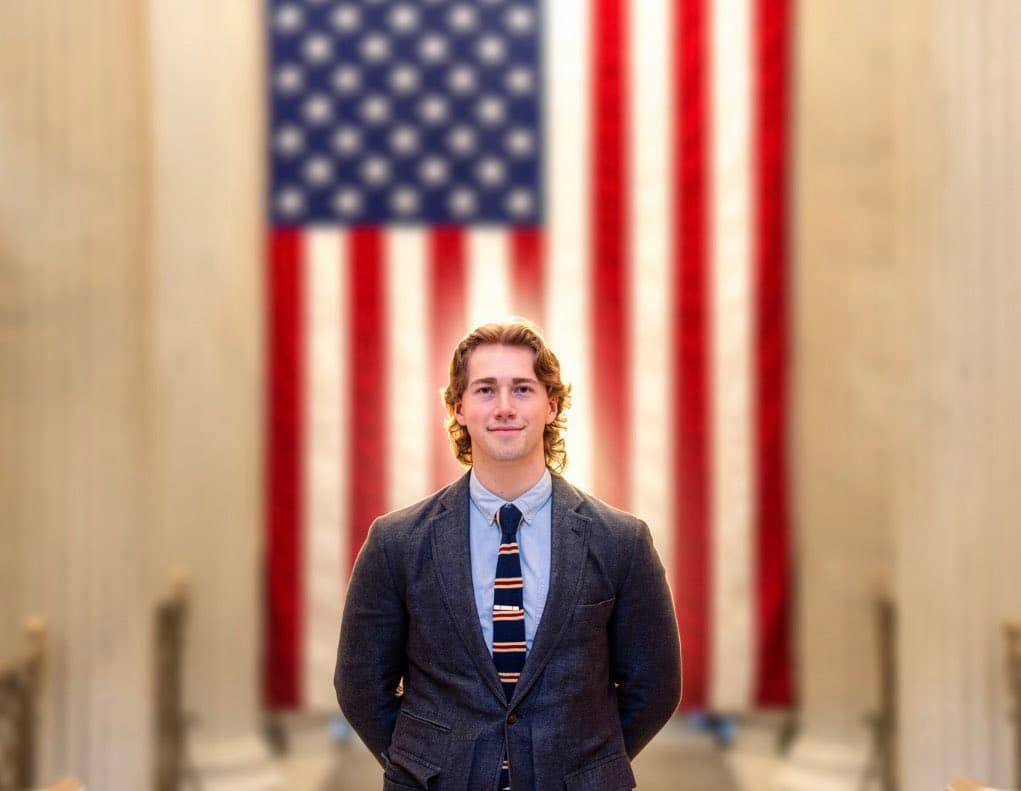
People had a lot to say when Kai Schwemmer–a 23-year-old conservative commentator and social media influencer from BYU–was hired by the Utah County Clerk's Office.
And by "people," I mostly mean the comment sections of social media.
Opinions flew. Outrage spread. You would have thought Utah County had just appointed him governor.
Well, let me tell you why I don't care.
It’s not because I agree with everything Kai says—I don't. Not because I think he's perfect—he's not. I don't care because when I look at the situation logically, the hiring makes complete sense.
Kai has built a following on social media where he openly shares his political opinions. Some people like what he says, others don't; that's how free speech works. In America, people are allowed to express their opinions, even unpopular ones.
What I don't understand is why having opinions that some people dislike should automatically disqualify someone from a job.
Kai was hired for a short-term position with a specific purpose: helping the Utah County Clerk's Office connect with young voters, educate first-time voters about the voting process, and increase civic engagement among young people in Utah County. Considering that Utah County is home to thousands of college students and young adults, that seems like a reasonable goal.
Let's not get confused about what this position actually was.
Kai was not hired to write election law. He was not hired to certify election results. He was not hired to create public policy. He was not elected to office.
As Utah County Clerk Aaron Davidson repeatedly affirmed in a public town hall meeting on June 11, he was hired to do a simple job: young voter outreach.
Considering that he already has a platform and an audience of young people, it is not difficult to understand why the Clerk's Office believed he could help accomplish that goal.
In fact, I applaud the Utah County Clerk's Office for making an effort to bring young people into the conversation. We constantly hear complaints about low voter turnout, political apathy, and the lack of civic engagement among younger generations. Here was an office actively trying to address that problem by reaching young voters where they are. Whether or not Kai was the perfect choice is open for debate, but the effort itself deserves credit, not condemnation.
There is also an irony in all of this. Universities, campaigns, nonprofits, and government offices spend enormous amounts of time and resources trying to figure out how to get young people involved in the political process. We are told that young voices matter, that civic engagement matters, and that the future belongs to the next generation.
Yet when a young person becomes politically involved and gains influence, many of the same people who claim to support youth engagement suddenly have a problem with it.
This reaction bothers me much more than Kai’s appointment.
People seem to think it is acceptable to attack a young person's career because they disagree with his opinions. They’re willing to publicly shame and harass someone over political disagreements rather than engage with the ideas themselves
What I found particularly strange was watching people effectively put Kai on trial for everything he has ever posted online. At public meetings and town halls, critics demanded answers for years of social media content as if he were a candidate running for office.
But he's not running for office.
He's not asking voters to elect him. He's not seeking authority over the public. He's not writing policy, certifying elections, or creating laws. He's a short-term employee hired to help connect with young voters.
And while these people criticized him, took his words out of context, and perpetuated misinformation about him, Kai stood by with a smile on his face and handed his accusers the microphone.
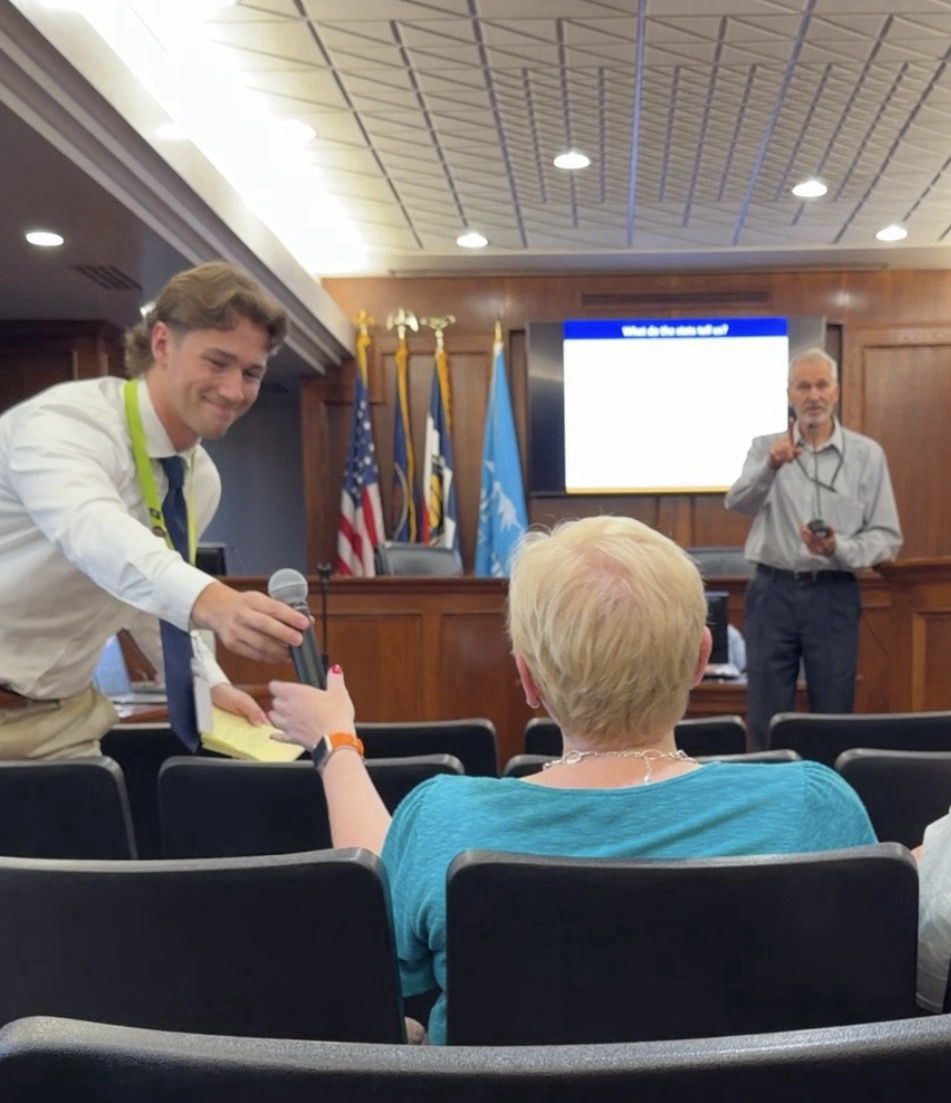
Kai Schwemmer hands the microphone to one of his vocal critics, Carren Crossley, founder of BURRN, at a public town hall on June 11.
You do not have to agree with Kai Schwemmer. In fact, I don't agree with everything he says either.
But political disagreement should not be disqualified.
And young people who are willing to engage in public life deserve a seat at the table.