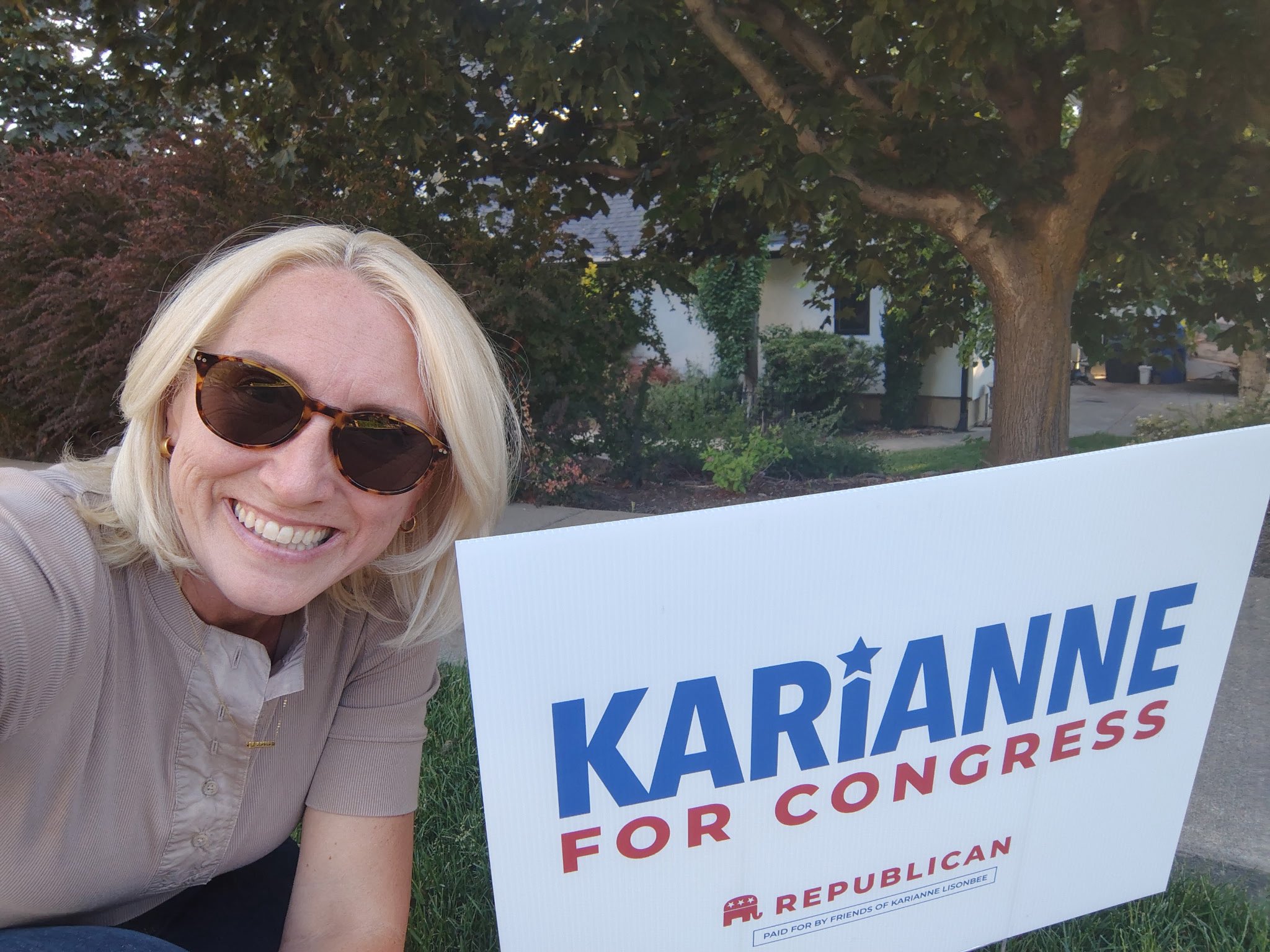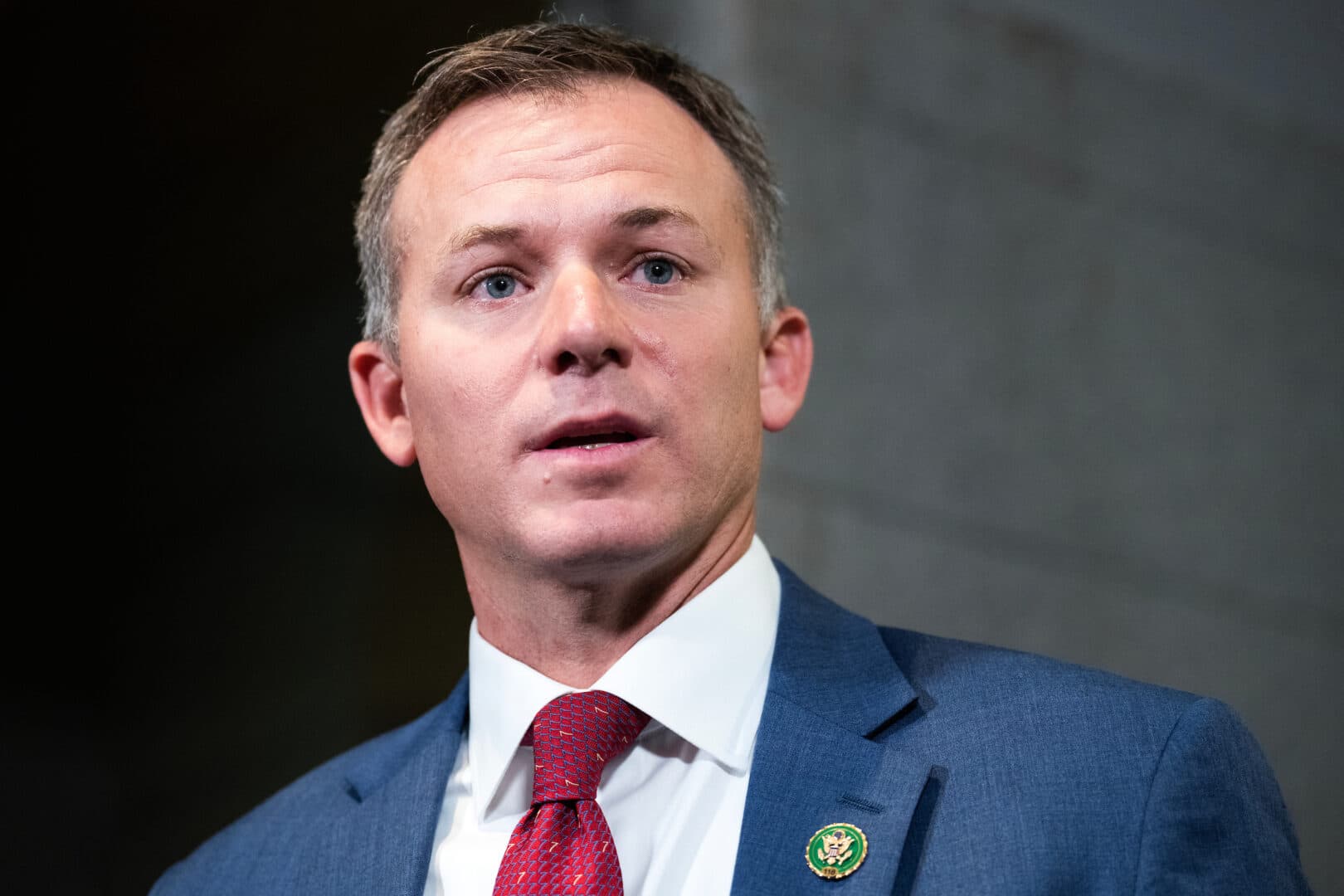
On June 23rd, residents of northern Utah face an important choice in the republican primary for Congressional District 2. Karianne Lisonbee, a current member of the Utah House representing Davis County, has held various positions in local and state politics. Blake Moore, an SLC resident, has served as a Congressman from Utah’s 1st district since 2020.
Both candidates are hoping northern Utahns will turn out for them. Lisonbee has engaged with voters through canvassing and local town halls, spending long hours chasing ballots in Northern Utah. Moore, on the other hand, hopes his incumbency and the victories he has achieved while in office can give him the edge.
However, his pre-office political history, corporate ties, and voting record paint a less than ideal picture. Here are three things CD2 voters should know before they cast their votes.
I. Better Boundaries
Before deciding to run for the House of Representatives, Blake Moore co-chaired the “Better Boundaries” campaign that pushed to change Utah redistricting laws to allow an unelected independent commission to “recommend” district lines. Their efforts resulted in the narrow passing of Utah Proposition 4 with 50.3% support and created new congressional districts, essentially handing Democrats a free seat in congress.
Moore has been criticized for his role in promoting and ultimately passing Prop 4. Blake framed the issue as a matter of transparency and fairness: “This whole ballot initiative is simply to make it so politicians don't get to choose their voters, that voters actually choose our politicians”. However, many disagreed with Moore’s perspective, arguing that Prop 4 disrupted representation and violated constitutional norms of accountability between voters and their representatives.
Members of his own party in the Utah legislature also heavily disagreed with Moore’s attempt to paint the initiative as non-partisan and fair. Rather than restore fairness, they saw Prop 4 as a deviation from the legislature’s traditional role in redistricting and a violation of the separation of powers.
Then Speaker of the House Gregory Hughes put it this way: “Legislators are elected by the citizens of this state to perform specific duties detailed in the Utah Constitution, and redistricting is a fundamental duty of the Legislature.”
Moore’s actions gifted Democrats a new congressional seat in Salt Lake County. Although challenges to the new map are ongoing, which undid legislation that nullified Prop 4, it has been approved and finalized for the 2026 midterms. Many conservatives, including the COO of Turning Point Action, Tyler Bowyer, have pledged to reverse the change and placed blame squarely on Blake Moore. Mr. Bowyer said, “We blame Salt Lake Blake for this entire mess,” and that Turning Point would go “all in on Utah”.
II. Corporate Establishment Interests
Besides his role in eliminating a republican seat from Utah’s delegation to Congress, Moore’s corporate ties fit the mold of an establishment republican.
Before his run for Congress, Moore worked as a consultant for Cicero Group, a prominent SLC management consulting firm. There, he rose to become the firm’s Principal and Engagement Manager, leading projects in healthcare, education, financial services, and other areas. Cicero has a long history of securing contracts across multiple Utah state agencies, including the Governor’s Office of Economic Opportunity and the State Board of Education.
In 2020, the firm was paid $98,500 in public funds to evaluate how the name “Dixie” affected Dixie State’s reputation, student recruitment, and alumni relations. That report was pivotal in the institution’s decision to change its name. The change sparked outrage from the St. George community and Dixie alumni.
Locals criticized the university’s decision and, suspicious of Cicero’s polling, filed a GRAMA request demanding the raw survey data. Utah Tech denied their request, claiming they did not own the files. One resident filed a lawsuit demanding that action be taken against the university for its refusal to comply with the GRAMA request. It was later revealed that Utah Tech and Cicero Group had secretly entered into a joint defensive agreement, allowing the parties to coordinate legal strategy and shield their communications under attorney-client privilege.
This controversy highlights the revolving door between lobbying firms, corporations, and governments within the state of Utah. It is important to note that Representative Moore was not directly involved in the Dixie study or explicitly named in the subsequent lawsuit. However, his smooth transition from his role as a Principal managing Cicero’s public policy strategy to congressional office reflects the revolving door.
III. Wealth and Financial Disclosures
Eliminating insider trading and political corruption has become a talking point on both sides of the partisan aisle. From dubious allegations of Epstein entanglement to actual resignations due to theft of taxpayer dollars, corruption has been at the forefront of American consciousness. While evidence for extraordinary claims of widespread corruption in the halls of Congress is lacking, many Americans are disappointed by how common it is for their representatives to accumulate fortune and power in high office. Blake Moore’s personal financial history mirrors the same pattern, too often seen in the modern political climate.
Upon arrival in Congress, Moore failed to disclose timely transactions for over 70 individual stock and stock-option trades. While most of these trades involved generic blue-chip options such as Amazon and Apple, Blake also failed to disclose a $60,000 purchase of Raytheon stock while actively serving on the House Armed Services Committee. Raytheon, a defense contractor, has an intimate relationship with the House Armed Services Committee, and its financial future directly relies on government defense contracts. Apart from Raytheon, Moore failed to disclose trading of Alibaba Group, a Chinese e-commerce company heavily tied to the country’s communist party. After the STOCK Act violations, Moore shifted his stock portfolio to primarily index funds.
Like many members of Congress, Representative Moore’s personal and family fortunes have increased substantially since his initial term. Yet, when faced with America’s national debt crisis and additional deficit spending, Moore has consistently voted to raise the debt ceiling and appropriate tens of billions of dollars in emergency foreign aid. That voting record earned Moore a score of 55% in the 118th Congress, according to Heritage Action’s scorecard.
In addition, the most recent campaign finance report shows Moore’s campaign is funded 3-1 by out-of-state money, with only 25% coming from in-state donors. PAC contributions also make up more than 50% of his campaign financing. Although typical among establishment republicans, these ratios paint Moore as a typical establishment republican rather than a grassroots conservative. Critics argue that such outside spending makes representatives more beholden to special interests than those they claim to represent.
Overall, Moore’s financial and voting records reflect the all-too-common pattern for the establishment class: net worth boosts due to congressional fame, failure to contain national debt, and special interest funding.
CD2’s Choice
Voters in northern Utah face a choice on June 23rd. Will constituents continue to support the establishment class that consistently overpromised and underdelivered, or will they take their chances on up-and-coming conservatives with bold and innovative ideas?
The Cougar Chronicle has endorsed Karianne Lisonbee because she is a true conservative and genuinely represents Utah's values. As a concerned citizen, I hope Utahns will take the time to research and vote for those who will really represent them.
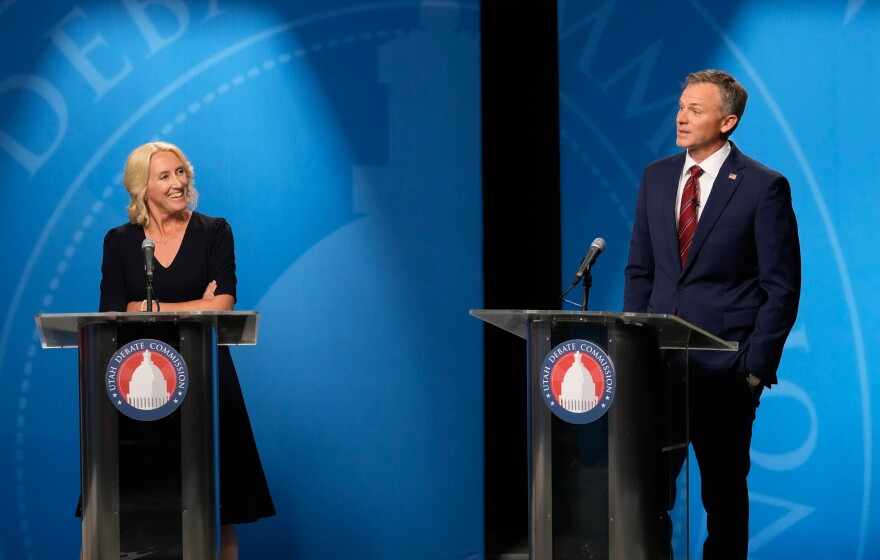
Pictured: Karianne Lisonbee and Blake Moore go head to head in the CD-2 GOP debate. Source: Kuer.org
Cover Photo Source: https://rollcall.com/2023/11/08/moore-tapped-for-house-leadership-vacancy-caused-by-johnson-promotion/